What Is a Shut Off Valve and What Types Are There?

A shut off valve is a small control with an important job: it stops or limits the flow of water, gas, or another fluid through a pipe. In a home, you may find one beneath a sink, behind a toilet, near a water heater, or beside a main supply line. Turn the handle, and the flow should stop. In practice, an old or rarely used valve may stick or leak, so its condition matters as much as its location. Small part. Big consequence.

The right valve depends on what it controls, the pipe connection, available space, and expected pressure. Common types include ball valves, which use a quarter-turn handle; gate valves, which lift or lower an internal gate; globe valves, which offer more control over flow; and butterfly valves, often used on larger pipes. Angle and stop valves are also common at household fixtures. Each design has trade-offs, and names can vary by region or application.

This guide explains what shut off valves do and how their main types differ. It also covers where they are typically installed and what to consider when choosing or inspecting one. A valve that works well for a sink may not suit a heating system or gas line. Check the manufacturer’s specifications, and seek qualified help for unfamiliar installations, especially those involving gas. It is easy to focus on the handle and overlook the connection, material, or operating conditions. That detail deserves a second look.
What Is a Shut Off Valve and What Types Are There?

Definition and Purpose of a Shut-Off Valve

A shut-off valve is a mechanical fitting that starts, stops, or isolates the flow of water or another compatible fluid in a pipe. It sits between connected sections, often near a sink, toilet, appliance, or building supply line. When open, fluid passes through; when closed, the valve blocks flow beyond that point. The basic idea is simple. Its condition is not always obvious.

The main purpose is controlled isolation. If a faucet leaks or a fixture needs repair, closing its nearby valve can stop the supply without shutting water off throughout the building. In an emergency, the main shut-off valve can limit ongoing flow and reduce water damage. A plumber may also close valves during inspection or replacement work.

Look for a handle or knob on the pipe, and label important valves so they are easier to find in dim light. Do not force a valve that feels stuck or shows corrosion; excessive pressure can damage the fitting or pipe.

A closed valve may still allow a small amount of water through if worn or obstructed. That detail is easy to overlook. Regular checks can reveal problems, though testing an old valve may itself cause a leak.

How Shut-Off Valves Control the Flow of Water and Gas

What Is a Shut Off Valve and What Types Are There?

A shut-off valve controls whether water or gas can pass through a pipe. Inside, a moving part opens or blocks the passage. Turning the handle closes the route, isolating a fixture or section of plumbing. For example, a small valve beneath a sink can stop water to the faucet without shutting off the whole house. A main valve near the water meter can stop supply to the entire home. It’s a simple action, but a stiff handle can make it harder than expected.

Common types include ball, gate, and globe valves. A ball valve usually opens or closes with a quarter turn; its handle sits parallel to the pipe when open and across it when closed. Gate valves use several turns and are often found on older water lines. Globe valves can control flow more gradually, though they may restrict it. Gas shut-off valves also use a barrier inside the pipe, but their location and operation vary. Don’t assume every valve works the same way.

Tips: Label key valves, and gently check that they move before an emergency. Don’t force a stuck handle. For gas, if you smell gas, leave the area and contact your gas utility or emergency services from a safe location. A valve helps limit flow; it does not diagnose a leak.

Key Components and Operating Mechanisms

A shut off valve controls whether water or another fluid can pass through a pipe. Its body forms the pressure-containing shell, while inlet and outlet ports connect it to the plumbing. Inside, a closure element meets a seat to restrict flow. The handle or lever moves this element through a stem. A bonnet or packing around the stem helps limit leakage. Small parts matter. Mineral buildup or worn seals can make a valve stiff or prevent a tight seal.

The operating mechanism depends on the valve design. A ball valve uses a drilled sphere that turns with the handle. A quarter-turn brings its opening in line with the pipe, or across it to stop flow. Gate valves lift or lower a flat gate, often requiring several handle turns. Globe valves move a disc toward or away from a shaped seat, allowing more controlled adjustment but creating greater flow resistance. These designs do not behave identically. A valve intended for simple on-and-off service may not seal reliably when left partly open.

When inspecting one, note the handle position, visible corrosion, and any moisture near the stem or joints. A valve that feels unusually tight deserves care; forcing it can damage internal parts. I have found that the label alone can be misleading, since age and installation affect performance. Check the valve’s material, size, and service rating before selecting a replacement.

Common Types of Shut-Off Valves

Common Types of Shut-Off Valves

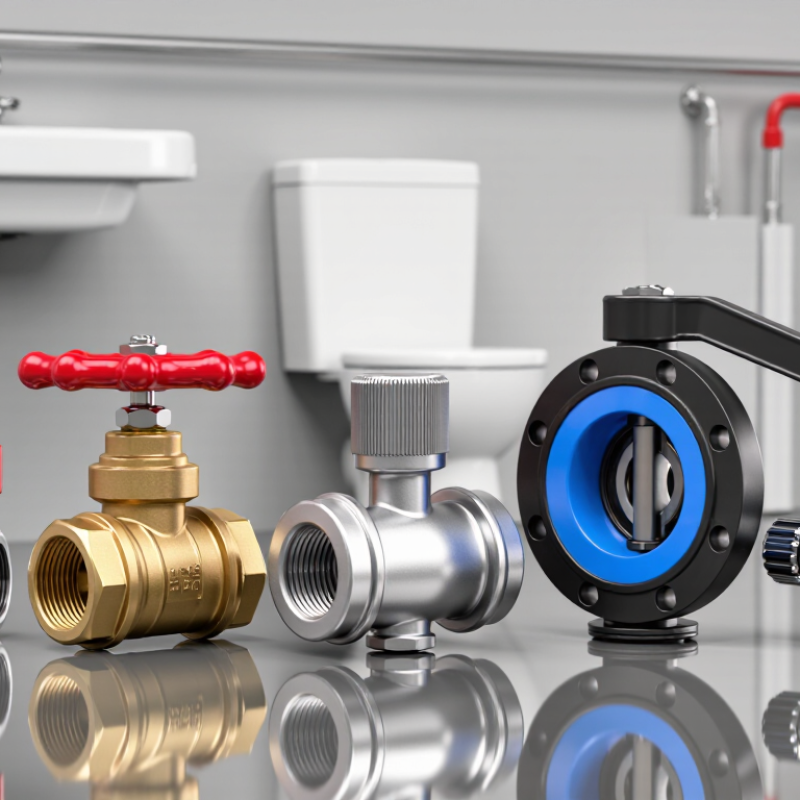
Ball valves use a quarter-turn handle to stop flow quickly. Their simple operation makes them common on water supply lines. Gate valves open by lifting a wedge, allowing relatively unrestricted flow when fully open. They are less suited to frequent operation, because wear or sediment can make them stiff. Globe valves close against a seat and can also regulate flow, though throttling may cause more pressure loss. For larger pipes, butterfly valves use a rotating disc and need little space. Each design has trade-offs.

Under sinks and behind toilets, small angle-stop or straight-stop valves isolate one fixture without shutting off the whole building. A quarter-turn stop is easy to recognize: the handle turns 90 degrees. EPA WaterSense’s Fix a Leak Week materials estimate that household leaks waste nearly 10,000 gallons of water annually. A working local shut-off valve can help limit waste when a fixture leaks, but it cannot replace timely repairs. Test accessible valves gently; old ones may seize or leak after being turned. That detail is often overlooked. For potable-water systems, choose valve materials and pressure ratings suited to the pipe and service conditions, and follow applicable plumbing guidance.

Common Types of Shut-Off Valves by Operating Motion

Among these five common valve types, ball, butterfly, and plug valves typically operate with a quarter turn. Gate and globe valves typically require multiple turns. The chart counts valve types in each operating-motion group; it does not indicate performance or market share.

Factors to Consider When Selecting a Shut-Off Valve

Selecting a shut-off valve starts with the fluid it will control. A valve suitable for clean water may not suit hot water, steam, or a chemically aggressive liquid. Check the valve’s rated pressure and temperature against the system’s actual operating conditions, not just its normal readings. Leave a safety margin. That matters.

Pipe size and connection type also affect selection. A valve should match the pipe diameter and connection method to avoid leaks or unnecessary flow restriction. Consider how often it will be operated. A quarter-turn ball valve can close quickly, while a gate valve is generally used for less frequent isolation. The right choice depends on the job. Fast closure is not always desirable, since sudden flow changes can stress piping.

Access is easy to overlook. If a valve sits behind a cabinet or near a wall, its handle must still turn fully, and the position should be easy to identify during a leak. Think about maintenance, too: some designs are easier to inspect or replace than others. For drinking-water lines, verify that materials are rated for that use. A small mismatch can matter.

Installation quality counts as much as the valve itself. Confirm the direction of flow where required, use compatible fittings, and follow the manufacturer’s specifications. If the service or pressure rating is unclear, ask a qualified plumber or engineer before buying. Selection can feel tedious, and no checklist catches every site detail.

What Is a Shut-Off Valve and What Types Are There? — Factors to Consider When Selecting a Shut-Off Valve

Valve Type How It Works Typical Strengths Limitations and Common Uses
Ball valve A drilled ball turns a quarter turn to align or block the flow passage. Fast operation, compact design, and effective shut-off when properly selected. Common for on/off isolation in water, air, and compatible process services. Standard designs are generally not intended for precise throttling.
Gate valve A gate moves up or down across the flow path. Offers a relatively unobstructed flow path and low pressure loss when fully open. Often used for isolation in pipelines. It operates more slowly than quarter-turn valves and is generally unsuitable for throttling, which can cause wear or vibration.
Globe valve A movable plug or disc presses against a seat, typically moving perpendicular to the flow path. Provides good flow regulation and can be suited to frequent adjustments. Useful where throttling is required, but its flow path usually creates greater pressure loss than a fully open gate valve.
Butterfly valve A disc rotates within the pipe to open, restrict, or close the flow. Lightweight and space-efficient, particularly in larger pipe sizes; quarter-turn operation is common. Used for isolation and, in suitable designs, flow control. Disc and seat materials must match the fluid and operating conditions.
Plug valve A bored cylindrical or tapered plug rotates to open or block the passage. Simple quarter-turn action; some designs handle fluids containing suspended solids. Used in selected isolation and process applications. Operating torque, sealing design, and maintenance needs vary by construction.
Diaphragm valve A flexible diaphragm moves against a weir or seat, separating the operating mechanism from the fluid. Can help isolate the fluid from internal moving components and is used in some corrosive, viscous, or solids-bearing services. Diaphragm material and pressure-temperature ratings are important limits; verify compatibility and operating conditions before selection.
Key Factors to Consider When Selecting a Shut-Off Valve
Service and fluid compatibility Identify the fluid, concentration, cleanliness, and any solids or abrasives. Select body, trim, seal, seat, and diaphragm materials that are compatible with the service.
Pressure and temperature Check the maximum and minimum operating conditions, including possible surges. Confirm that the valve’s pressure-temperature rating applies to the selected materials and configuration.
Pipe size and flow requirements Match the valve size and flow capacity to the system. Consider pressure loss, available space, and whether the valve is for full isolation or also needs to regulate flow.
Operation and actuation Choose manual, electric, pneumatic, or hydraulic operation based on access, required opening speed, control needs, and available power. Confirm that the actuator can provide the required operating force or torque.
End connections and installation Verify the connection type and applicable dimensions, such as threaded, flanged, welded, or grooved ends. Allow for installation clearance, orientation requirements, and maintenance access.
Shut-off performance and maintenance Define the required leakage performance and frequency of operation. Consider inspection, seal replacement, expected wear, and whether the valve can be serviced safely in the installation.