Choosing the best pressure control valve from China requires more than comparing prices on a supplier website. The decision should begin with the operating facts: medium, inlet pressure, outlet pressure, flow range, temperature, pipe size, and required control accuracy. A valve handling clean water may need different trim from one handling steam, corrosive chemicals, or abrasive slurry. Small details matter. A stainless-steel body, a correctly sized Cv, and a stable actuator can prevent costly production interruptions.
Béla G. Lipták, a respected process-control engineer, wrote, “The control valve is the most important final control element in a process control loop.” His observation explains why sourcing should include engineering verification, not only factory selection. Ask Chinese manufacturers for material certificates, pressure-test records, calibration data, actuator specifications, and clear traceability. Review their quality system, machining capability, inspection equipment, and experience with similar applications. A video tour helps, but an independent inspection may reveal more.
Do not trust impressive photographs alone.
A reliable supplier should explain how the valve performs during start-up, shutdown, pressure fluctuations, and actuator failure. Check whether the design supports the required fail-open or fail-closed position. Confirm applicable international standards and project-specific requirements with qualified engineers. Some buyers focus heavily on purchase price. That can be a mistake. Yet the most expensive option is not automatically the safest choice either. I have seen technically strong quotations fail because communication, documentation, or spare-part support was weak. The best pressure control valve is the one that matches the process, survives real operating conditions, and remains supportable after delivery.
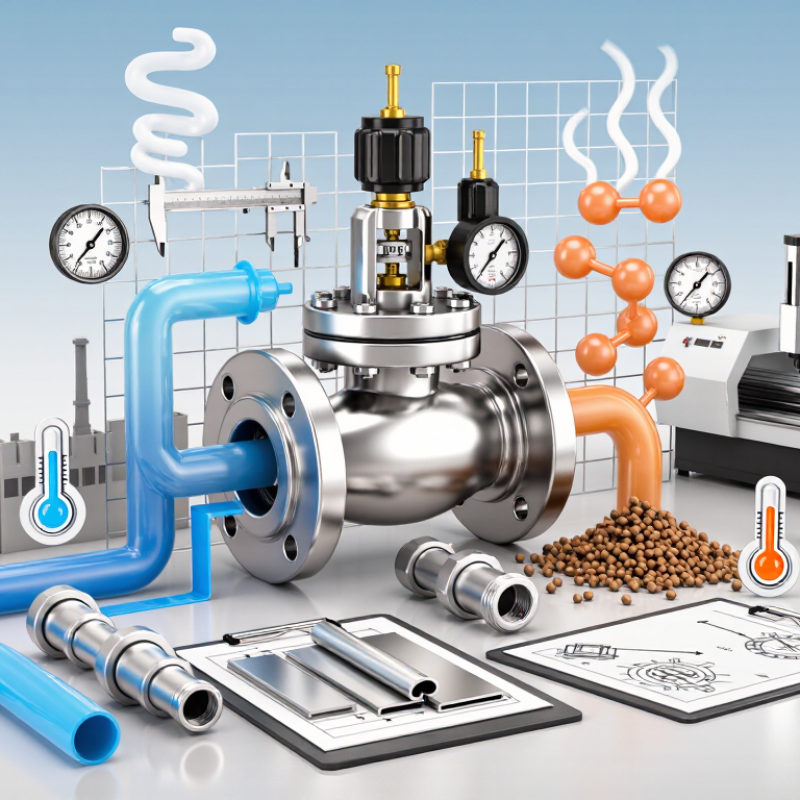
Before comparing pressure control valves from China, define the actual operating conditions. Identify the fluid, inlet pressure, required outlet pressure, flow range, temperature, and pressure fluctuations. Keep them visible. A valve designed for clean water may fail quickly with abrasive particles or corrosive chemicals.
Specify the control objective in measurable terms. State whether the valve must maintain downstream pressure, reduce upstream pressure, or protect equipment from overpressure. Include minimum, normal, and maximum flow rates.
A stable valve at 20% flow may behave poorly near its full capacity. That detail is often missed. Also confirm the connection size, end standard, body material, seal material, and actuator type. These choices affect service life, installation, and maintenance.
For Chinese suppliers, send a written data sheet instead of relying on general descriptions. Request pressure-temperature ratings, flow coefficients, leakage limits, material certificates, inspection records, and calibration results.
Ask how the valve performs during sudden load changes. It is a useful test. Confirm the required control signal, fail-safe position, installation direction, and available spare parts.
If the application is outdoors, include ambient temperature, humidity, vibration, and possible dust exposure. Some specifications remain incomplete until the piping layout is reviewed. A short technical call with the supplier can reveal mismatched assumptions before production begins.
Choosing a pressure control valve from China starts with comparing valve types and pressure ratings, not purchase price. Globe valves offer precise throttling for steam and water. Ball valves provide fast isolation, but their control range can be limited. Butterfly valves reduce weight and cost on large pipelines. Pilot-operated regulators suit stable, high-flow systems, yet they need clean control media and careful tuning.
Pressure ratings must match temperature and fluid conditions. ASME Class 150, 300, and 600 are not direct equivalents to PN16, PN40, or PN100. Check the pressure-temperature table in ASME B16.34, then confirm sizing under IEC 60534. Global industrial valve demand was valued at about USD 78 billion in 2023, according to Fortune Business Insights, with infrastructure and process industries driving growth. Market figures vary between reports, so treat forecasts carefully. They are useful, not absolute.
During supplier evaluation, request material certificates, pressure-test records, leakage results under ISO 5208, and actuator calibration data. A Class 300 valve may fail early if temperature reduces its allowable pressure. Small details matter. I have found that drawings can look complete while trim materials remain unclear. Ask for the exact seat, body, and diaphragm materials. Confirm each test certificate matches the serial number. Factory audits, sample inspections, and traceable documentation provide stronger evidence than a polished quotation.
How to Choose the Best Pressure Control Valve from China?
When sourcing a pressure control valve from China, material selection should match the working medium. Stainless steel suits many corrosive applications, while carbon steel can serve less aggressive systems. For steam, hot oil, or outdoor service, check temperature limits, corrosion resistance, and seal compatibility. Small details matter. A valve body may look strong, yet an unsuitable gasket can fail quickly.
A reliable specification should identify pressure class, connection type, flow range, and leakage requirements. Standards such as ASME, API, and ISO can support consistent design and testing. However, a certificate alone proves little. Confirm its scope, issuing organization, and connection to the exact valve model. Request pressure-test records, material certificates, and inspection reports. Documents should match the serial number.
Manufacturing quality appears in the factory, not only in polished photographs. Look for traceable raw materials, calibrated testing equipment, controlled welding, and clear inspection procedures. Ask how workers measure seat leakage and actuator response. I once underestimated packaging quality; moisture entered a crate and stained untreated components. That mistake was avoidable. Inspect storage areas, machining surfaces, and final assembly practices when possible. If a supplier refuses reasonable technical questions, treat that silence as useful information. Production records matter.
Choosing a pressure control valve from China requires more than comparing unit prices. Supplier capability should be tested against your actual operating conditions: 16-bar inlet pressure, 120°C fluid temperature, corrosive media, and frequent cycling. Ask for material certificates, pressure-test records, flow curves, and traceable serial numbers. ISO Survey 2022 recorded 1,265,216 ISO 9001 certificates worldwide, but certification alone does not prove valve performance. Check the certificate scope, audit status, and manufacturing address. Request a video inspection of machining, assembly, calibration, and final testing. Small details matter.
Certifications should match the destination market and application. Depending on the project, review conformity documents, functional safety evidence, explosion-protection documentation, and pressure-equipment compliance. A 2023 MarketsandMarkets report valued the industrial valves market at about USD 78.7 billion and forecast continued growth through 2028. That expansion increases supplier choices, but also increases verification work. Customization should include connection standards, actuator sizing, seal materials, fail position, control signal, and spare-part availability. Ask for a drawing before production. One overlooked gasket material can delay commissioning. I have seen technically strong quotations fail because the supplier copied a generic datasheet. That mistake is avoidable, though not always obvious. Require sample testing under simulated pressure, temperature, and cycle conditions, then compare the results with the approved specification.
| Evaluation Category | Key Dimension | Recommended Technical Benchmark | Evidence to Request from the Supplier | Priority |
|---|---|---|---|---|
| Pressure Range | Design and operating pressure | Confirm that the valve body, trim, actuator, and end connections are rated above the maximum allowable working pressure of the system. Common industrial pressure classes include ASME Class 150, 300, 600, 900, 1500, and 2500. | Pressure-temperature rating chart, design calculations, material certificates, and hydrostatic test records. | Critical |
| Flow Performance | Flow coefficient and controllability | Request Cv or Kv data at the intended operating conditions. The selected valve should normally operate within a controllable portion of its travel rather than remaining almost fully open or closed. | Flow characteristic curves, sizing calculation, cavitation assessment, and noise prediction where applicable. | Critical |
| Temperature Capability | Process and ambient temperature | Verify the complete temperature range, including the valve body, seat, packing, diaphragm, seals, actuator, and accessories. PTFE, elastomers, and metal seats have different temperature limits. | Temperature rating table, seal material specification, low-temperature or high-temperature test reports, and operating manual. | Critical |
| Materials | Body, trim, seat, and seal materials | Material selection should match the medium, corrosion conditions, pressure, temperature, and required service life. Common body materials include carbon steel, stainless steel, and alloy steel. | Material certificates according to EN 10204 3.1 or an equivalent document, chemical composition reports, and corrosion compatibility information. | Critical |
| Manufacturing Capability | Machining, assembly, and process control | Prefer suppliers with controlled machining, clean assembly areas, calibrated inspection equipment, traceable production records, and documented nonconformance procedures. | Factory audit report, process flow chart, inspection and test plan, equipment list, calibration certificates, and quality-control procedures. | Critical |
| Quality Management | Quality management system | ISO 9001 certification is a useful baseline for documented quality processes. The certificate should cover the relevant manufacturing and service activities and remain valid at the time of purchase. | Current ISO 9001 certificate, certification-scope statement, recent surveillance record, and certificate verification details. | Critical |
| Product Compliance | Market and application regulations | For equipment within the European pressure-equipment scope, assess conformity with the Pressure Equipment Directive 2014/68/EU where applicable. Hazardous-area installations may require ATEX 2014/34/EU compliance. | Declaration of Conformity, notified-body documentation where required, technical file index, marking information, and applicable conformity assessment records. | Critical |
| Functional Safety | Safety instrumented service | For shutdown or safety-instrumented applications, verify the required SIL capability according to IEC 61508. SIL suitability applies to the complete safety function, not automatically to the valve alone. | Functional-safety certificate, safety manual, failure-rate data, proof-test guidance, and stated assumptions for the SIL calculation. | Critical |
| Corrosive Service | Oil, gas, sour-service compatibility | For wet hydrogen sulfide service, evaluate materials and manufacturing controls against NACE MR0175/ISO 15156 requirements when specified by the project or end user. | Material compliance statement, hardness results, heat-treatment records, positive material identification reports, and sour-service qualification documents. | Critical |
| Leakage Control | Seat and external leakage | Define the required shutoff class before quotation. Common control-valve seat leakage references include IEC 60534-4 or equivalent project specifications; the required class depends on the service. | Factory acceptance test procedure, leakage test results, pressure-test records, and packing or stem-seal inspection records. | Critical |
| Customization | Connections, actuators, accessories, and materials | Confirm support for customized flange standards, threaded or welded ends, actuator type, fail position, positioner, limit switches, solenoid valves, filters, transmitters, and special trim designs. | Approved general arrangement drawing, datasheet, bill of materials, interface drawing, accessory list, and change-control record. | Important |
| Engineering Support | Sizing and application review | A capable supplier should review pressure drop, minimum and maximum flow, fluid properties, flashing, cavitation, noise, actuator torque, and installation orientation before final selection. | Completed sizing sheet, valve selection report, technical clarification log, and signed application review. | Critical |
| Testing Capability | Inspection and factory acceptance testing | Testing should be defined by the purchase specification and may include shell testing, seat leakage testing, functional testing, dimensional inspection, and accessory verification. | Inspection and test plan, test procedures, calibrated instrument list, test certificates, and customer witness or hold-point records. | Critical |
| Traceability | Serial number and documentation control | Each valve should be traceable from the nameplate and serial number to raw materials, heat treatment, machining, assembly, inspection, testing, and final release. | Traceability matrix, nameplate drawing, manufacturing record book index, material heat numbers, and final release certificate. | Critical |
| Delivery Capability | Lead time and production capacity | Assess lead time based on valve size, pressure class, material, actuator, testing, and certification requirements. Stock availability should not be assumed for customized or high-pressure valves. | Manufacturing schedule, production-capacity statement, long-lead-item list, milestone plan, and on-time delivery history. | Important |
| After-Sales Service | Spare parts, repair, and technical support | Confirm the availability of replacement seats, seals, packing, trim, actuators, positioners, and maintenance instructions for the expected service life. | Spare-parts list, recommended maintenance schedule, warranty terms, troubleshooting guide, and service-response procedure. | Important |
| Total Cost | Purchase price and lifecycle cost | Compare the purchase price together with testing, certification, spare parts, energy consumption, maintenance intervals, downtime risk, and replacement cost. | Itemized quotation, lifecycle-cost assumptions, warranty conditions, spare-parts pricing, and clearly stated exclusions. | Important |
A low quotation deserves careful checking. Ask for the complete valve price, including actuators, fittings, inspection, packaging, and export documents. Compare identical materials, pressure ratings, connection standards, and temperature ranges. A cheaper valve may use thinner components or exclude essential testing. Request a clear cost breakdown. It exposes hidden charges early. During supplier discussions, record every specification in one approved datasheet. Verbal promises are easy to misunderstand.
Testing should match the valve’s actual service conditions. Request hydrostatic tests, shell inspections, seat leakage results, and calibration records. Ask whether each serial number appears on the report. Photos of gauges, test benches, and nameplates add useful evidence. Independent inspection can strengthen confidence for large orders.
Still, paperwork is not proof of everything. I once trusted a neat report and failed to confirm the actuator’s response time. That mistake delayed commissioning.
Delivery planning needs practical detail. Confirm production lead time, inspection dates, carton protection, and spare-part availability. Ask for progress photos before shipment. Wooden cases should protect flanges and prevent moisture damage during transport.
After-sales support matters when a valve sticks at midnight. Seek written response times, warranty conditions, troubleshooting procedures, and replacement-part policies. A supplier should explain who handles technical questions after payment.
Test this support before ordering by sending a detailed application question. Slow replies are a warning. Not always, but often.