10 Best Automatic Valve Suppliers for Global Buyers

Automatic valves turn control signals into physical action. They start, stop, or regulate flow in water, energy, chemical, and manufacturing systems. For global buyers, selecting a supplier means looking beyond catalog breadth. Actuator sizing, control compatibility, materials, documentation, spare parts, and service coverage all matter. A polished datasheet cannot guarantee a valve will perform well in a real installation.

The market is substantial, but the figures need context. Grand View Research estimated the global industrial valves market at USD 79.5 billion in 2023 and projected a 4.9% compound annual growth rate from 2024 to 2030. This is an industrial-valve benchmark, not an automatic-valve-only estimate. Béla Lipták, editor of the Instrument Engineers’ Handbook, describes control valves as “final control elements”—a useful reminder that valve performance affects the whole control loop. Buyers should check pressure and temperature limits, fail-safe behavior, actuator response, and compatibility with their control system. Small details count.

The suppliers in this guide are assessed through practical buying criteria: product range, technical support, customization, quality information, and reach across regions. Compare the actual model and application, not just the brand name. A supplier’s service network may matter more than a broad brochure when a replacement is needed quickly. And no ranking can replace engineering review; that limitation deserves saying plainly.
10 Best Automatic Valve Suppliers for Global Buyers

Automatic Valves: Core Functions and Common Types

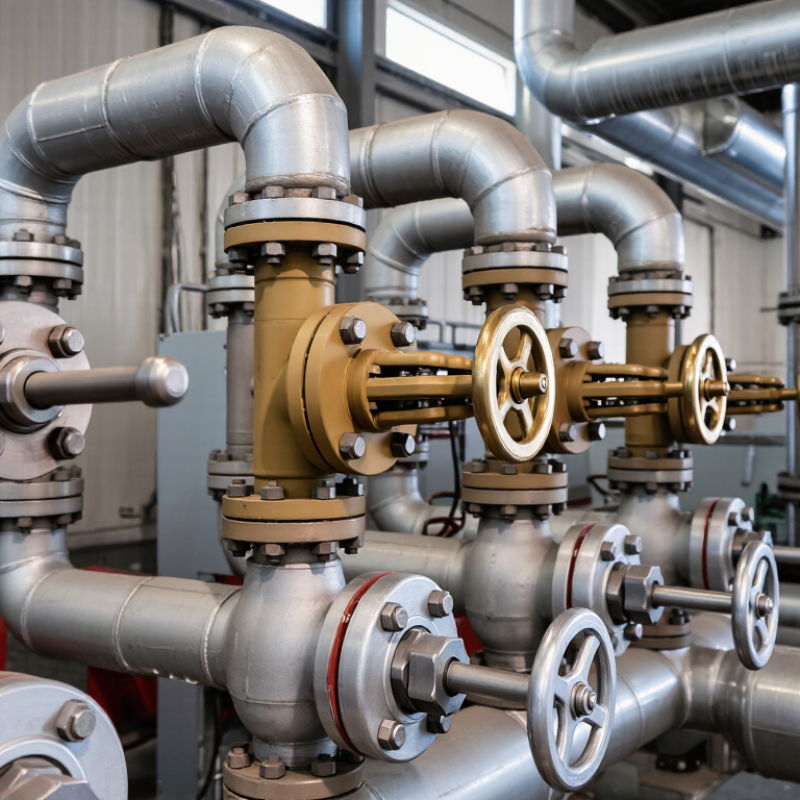
An automatic valve combines a valve body with an actuator that opens, closes, or modulates flow from a control signal. Electric actuators suit precise positioning and sites with available power; pneumatic actuators respond quickly where compressed air is reliable. Hydraulic units provide high force for demanding service. Sensors and positioners can report valve position to a control system. Small details matter. A sticky stem or poorly sized actuator can undermine an otherwise sound control loop.

Common types include ball valves for quick shutoff, butterfly valves for compact, larger-bore lines, and globe valves for throttling. Gate valves generally serve isolation, not frequent flow adjustment. Diaphragm valves can suit corrosive or hygienic processes, depending on materials and design. These are not interchangeable.

Selection depends on pressure, temperature, fluid, leakage limits, cycle frequency, and maintenance access. Grand View Research’s Industrial Valves Market report estimated the global market at USD 78.4 billion in 2023, with projected growth through 2030. That market figure covers industrial valves broadly, not automatic valves alone. Buyers should check test conditions and actuator sizing; catalog ratings can hide practical limits.

Key Criteria for Evaluating Suppliers in Global Markets

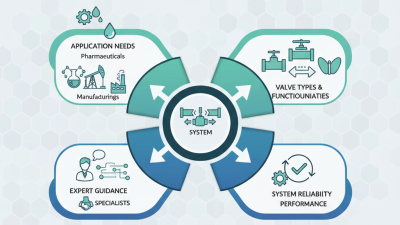
Global buyers comparing automatic valve suppliers should look beyond catalog range. Start with service conditions: medium, pressure, temperature, cycle frequency, and installation space. Ask for pressure-temperature charts, material certificates, and actuator sizing calculations based on your actual duty. A valve that fits the pipe may still struggle under frequent cycling. Small detail, big consequence.

Review factory quality controls. Request inspection records, traceability for wetted materials, and examples of pressure or seat-leakage tests. Confirm that testing follows a recognized standard relevant to the valve type and destination market. A generic “tested” claim is not enough. Technical documents should match model codes and revision dates. Missing pages are a warning, not paperwork trivia.

Tips: Send each supplier the same operating data, drawings, and acceptance limits. Compare lead times, spare-part availability, commissioning support, and response hours—not just price. Ask who handles warranty claims and what evidence they require. A brief call with an applications engineer can show whether answers are specific. Keep a record of assumptions; buyers sometimes overlook them, too.

For international delivery, check packing for sea or air freight, labeling, and export documents before order release. Evaluate time-zone coverage and escalation paths. References from similar services can help, but they are not guarantees. No supplier is flawless; record open questions and verify them before approval.

Profiles of Ten Leading Automatic Valve Suppliers

MarketsandMarkets valued the global control-valve market at US$7.7 billion in 2023. Its report projected US$10.3 billion by 2028, reflecting demand across process industries. These ten supplier profiles highlight different capabilities, not a verified ranking. Buyers should check the complete valve-and-actuator assembly, not just the catalogue description.

One profile is a global process-control supplier with broad sizes and materials. Another specializes in severe-service valves for high temperature and pressure. A third focuses on compact pneumatic valves for automated machinery. A fourth pairs electric actuators with configurable controls. A fifth serves high-pressure energy applications, where sealing details matter. A sixth designs hygienic valves with smooth, cleanable surfaces. A seventh supplies corrosion-resistant equipment for water treatment. An eighth offers custom-built valves for regional industrial needs. These differences look small on paper. They can change installation time.

A ninth supplier stands out for position feedback and diagnostic options. A tenth competes through standard models, replacement parts, and shorter lead times. I would ask each supplier for pressure-temperature ratings, leakage-test records, actuator response data, and service-part availability. Also request references for comparable fluids and operating cycles. Not every supplier reports lifecycle costs clearly; that gap deserves scrutiny. A low purchase price can hide frequent seal replacement or slow repair support.

Comparing Product Range, Certifications, and Support

Global buyers should compare automatic valve suppliers by application fit, not catalog size alone. Grand View Research estimated the global industrial valves market at about US$78 billion in 2023. That scale reflects diverse needs, from compact solenoid valves on packaging lines to actuated quarter-turn valves in water plants. A useful shortlist should show pressure and temperature ranges, materials, connection types, and actuator options. Not just product counts.

Certifications need close checking. ISO 9001 concerns a supplier’s quality management system; it does not certify every valve’s performance. For pipeline service, buyers may request API 6D evidence, while ISO 5211 covers actuator mounting interfaces. Ask for documents tied to the exact model, size, and pressure class. Not a generic certificate. Compare inspection records, material traceability, and test procedures too. Requirements vary by market and application.

Support can matter as much as specifications when a valve fails during a shutdown. Check whether the supplier provides dimensioned drawings, spare-part lists, commissioning guidance, and realistic lead times. A clear response-time commitment is more useful than a vague promise of “global service.” One caution: supplier comparisons are imperfect; published ratings rarely show how quickly technical teams resolve a mismatch between an actuator and valve. Ask for a sample test report and a named technical contact before placing a large order.

Steps for Shortlisting and Verifying a Supplier

Shortlist automatic valve suppliers by matching their capabilities to the actual service conditions. Share the fluid type, operating pressure, temperature range, connection size, and expected duty cycle. Ask for written confirmation that the proposed valve suits these requirements. Vague assurances are not enough.

Compare technical submittals, not just prices. Check materials, actuator specifications, response time, leakage limits, and stated test procedures. Request sample inspection reports and traceability records for the valve body and critical components. Verify certificates with the issuing organization where practical, and confirm that documents apply to the exact model offered. Small details matter.

Ask how the supplier handles design changes, production delays, and warranty claims. Request two or three recent customer references in similar applications, then ask about delivery consistency and after-sales support. If possible, review the factory’s quality process or arrange an independent inspection before shipment. Look closely at calibration records, packaging, and marking on a finished unit. Keep records. No checklist catches everything, and a polished presentation can still hide gaps. I would also note unanswered questions rather than quietly assuming they are minor. A supplier that responds clearly, shares evidence, and admits limitations is often easier to assess than one that promises perfection.

10 Best Automatic Valve Suppliers for Global Buyers - Steps for Shortlisting and Verifying a Supplier

Shortlisting and verification checklist: Use these ten checks to compare suppliers objectively. Requirements vary by valve type, application, destination market, and project specification; this is not a ranked list of companies.

Step Evaluation Area What to Verify Useful Evidence to Request Buyer Verification Action
1 Application and product fit Confirm valve type, size, pressure class, temperature range, process fluid, end connections, and required operating mode. Completed technical questionnaire, product datasheet, dimensional drawing, and stated design limits. Compare the proposed configuration with the process datasheet and project specification; resolve any deviations in writing.
2 Valve and actuator compatibility Check actuator type, supply requirements, fail position, operating time, torque or thrust margin, and mounting interface. Actuator sizing calculation, torque or thrust data, mounting details, and actuator wiring or pneumatic diagrams. Confirm the actuator is sized for the specified service conditions and that the valve-actuator assembly matches the required interface, such as ISO 5211 where applicable.
3 Control and automation interfaces Verify the required control signal, feedback, communication protocol, limit switches, solenoid valves, and electrical or pneumatic connections. Instrument list, input/output schedule, connection diagrams, and details of supported protocols and accessories. Check compatibility with the plant control system and confirm signal ranges, fail-state behavior, and interface details before ordering.
4 Pressure and functional testing Establish the required inspection and test scope for the valve type and applicable project standard. Inspection and test plan, pressure-test procedure, sample test report, and final test records for the supplied units. Specify acceptance criteria in the purchase documents. ISO 5208 and API 598 are examples of industrial valve pressure-testing standards; applicability depends on the product and specification.
5 Applicable standards and market approvals Identify standards and regulatory requirements that apply to the product, installation location, and destination market. Relevant conformity documents, certificates, declarations, and a clear list of covered models and configurations. Check certificate scope, validity, issuing body, and product model against the exact order. Do not assume one approval applies to every valve or market.
6 Hazardous-area suitability For hazardous locations, verify the classification, gas or dust group, temperature class, equipment protection level, and required jurisdictional scheme. Equipment certificates and markings for the actuator, solenoid, positioner, switches, and other electrical accessories. Match every installed electrical component and its certificate conditions to the site classification; ATEX and IECEx are examples of relevant schemes in applicable markets.
7 Quality management and traceability Review quality controls, material identification, manufacturing records, and traceability requirements specified for the project. Quality-system certificate, inspection procedures, material certificates where required, and sample serial-number or batch records. Verify the certificate's scope and validity independently where possible. ISO 9001 concerns quality management systems and does not by itself certify a particular valve's performance.
8 Manufacturing capacity and delivery Assess production location, stated lead time, order capacity, component availability, and the supplier's ability to meet delivery milestones. Written production schedule, delivery assumptions, capacity confirmation, and details of any outsourced processes. Ask the supplier to identify schedule risks and long-lead components, then confirm shipment terms, packaging, and document deadlines in the contract.
9 Documentation and lifecycle support Confirm the documentation package, spare-parts availability, maintenance guidance, warranty terms, and technical support coverage. Document index, installation and maintenance manuals, recommended-spares list, warranty statement, and support contact process. Agree which documents are required at quotation, approval, shipment, and handover stages; clarify response times and service responsibilities.
10 Commercial and supplier verification Review the legal contracting entity, payment terms, pricing assumptions, export capability, and references for comparable applications. Business registration details, formal quotation, reference projects, export documentation capability, and written commercial terms. Verify the contracting entity and references through independent channels. Compare quotations on the same technical scope, delivery basis, inspection level, and documentation requirements.