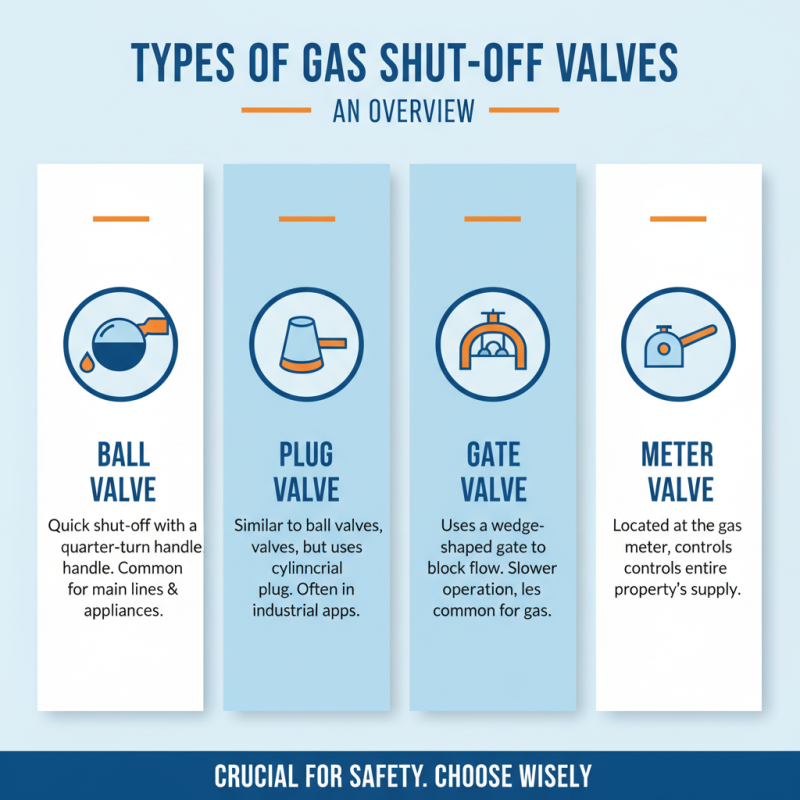
In the realm of gas safety, understanding gas shut off valves is crucial. These devices serve as the first line of defense against gas leaks and explosions. According to the National Fire Protection Association, gas leaks account for a significant number of home fires annually. Frank Thompson, a leading expert in gas safety, states, “Every homeowner should know what gas shut off valves do and where they are located.” This emphasizes the importance of being informed.
Different types of gas shut off valves serve various applications. From manual valves to automated systems, each type has its specific function. Industry reports indicate that over 60% of gas-related incidents stem from improper valve management. This highlights the need for education and awareness among consumers. Often, homeowners overlook these critical components, leading to potentially dangerous situations.
While advancements have been made, challenges remain. Many people fail to understand the complexities involved in gas shut off systems. It's clear that awareness and knowledge can save lives. As the industry evolves, ongoing training and information dissemination is essential for safety. Understanding the top 10 gas shut off valve types can empower individuals to make informed decisions.
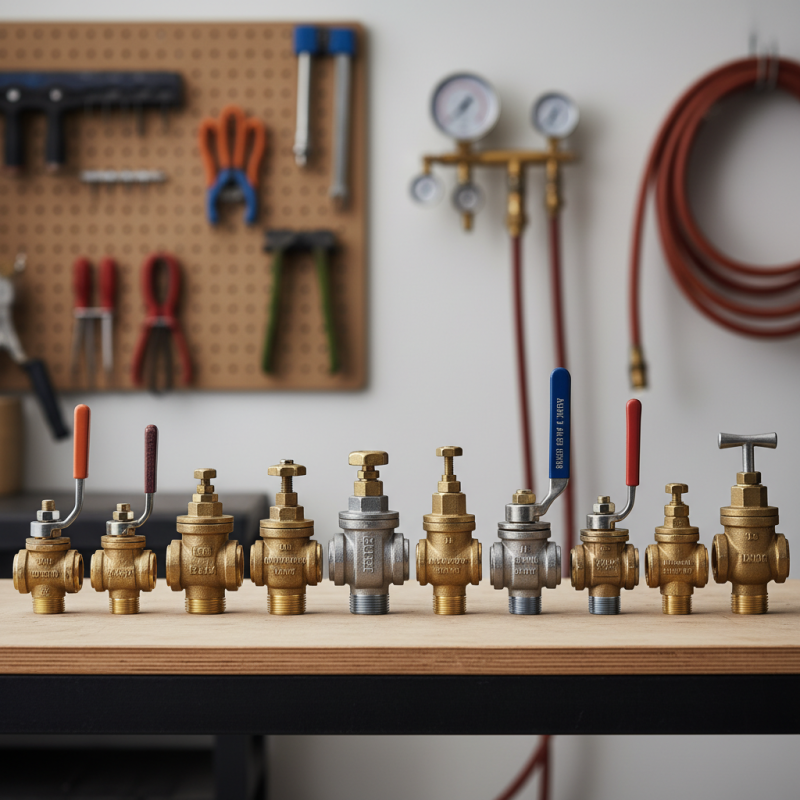
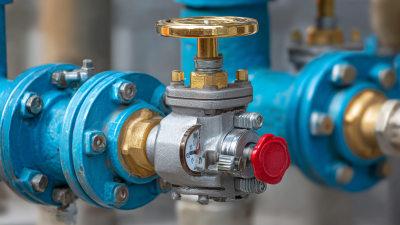
Gas shut off valves are crucial for safety. They come in different types, each designed for specific applications. Understanding these types can help you make informed decisions.
A common type is the ball valve. It has a simple design and offers quick on/off control. Another option is the gate valve, known for its durability. However, it can be slower to operate. You should also consider the globe valve. It allows for better flow control, but it may not shut off completely when needed.
**Tip:** Always check the valve's rating for your gas type. This ensures it functions safely and effectively.
Another important type is the solenoid valve. It operates electronically and suits automatic systems. Although convenient, its dependence on electricity can be a drawback. The safety shut off valve is designed to activate in emergencies. It can save lives, but it’s essential to maintain it well.
**Tip:** Regularly test your valves for leaks. Maintenance can prevent disasters. Remember, even small inconveniences can lead to bigger problems if not addressed promptly.
Manual gas shut-off valves play a crucial role in ensuring safety and functionality in gas systems. These valves allow users to manually control the flow of gas. For instance, when performing maintenance, it's essential to cut off the gas supply efficiently. According to industry reports, nearly 40% of gas-related incidents are linked to improper valve operation or failure to shut off gas supplies. Understanding how these valves work can prevent such hazardous situations.
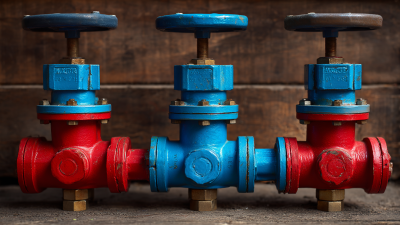
Knowing the types of manual valves is important. Commonly used types include ball valves, gate valves, and globe valves. Each type has unique operational mechanics, affecting their suitability for specific applications. Proper installation and maintenance are critical. A poorly installed valve can lead to leaks or even explosions. As outlined by safety organizations, regular checks can significantly reduce risks.
Tips: Always replace valves after significant wear or damage. Consider using a wrench to fully engage valve handles. This avoids accidental gas flow and enhances safety.
Be aware that some older valves lack modern safety features. Upgrading to a newer valve can be a wise investment. Regular training on valve operation for users can also enhance safety. By staying informed, users can navigate the complexities of gas shut-off systems effectively.
This chart displays the usage frequency of various types of gas shut-off valves. Understanding the prevalence of each type can aid in selecting the right valve for specific applications.
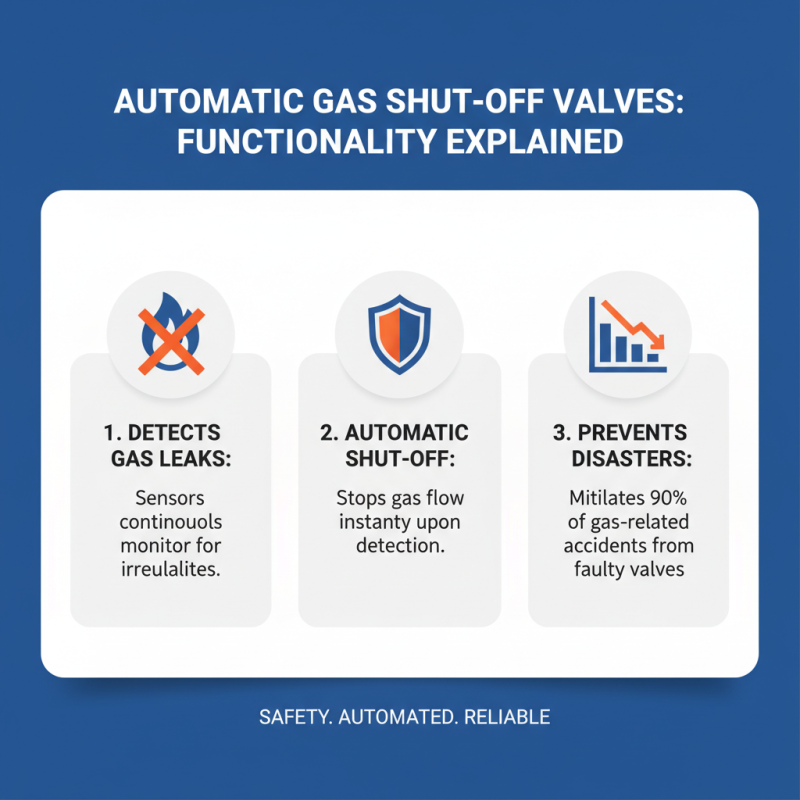
Automatic gas shut off valves play a crucial role in safety. They detect gas leaks and automatically stop the flow of gas. According to industry reports, around 90% of gas-related accidents occur due to faulty valves. These automatic systems can prevent disasters by responding quickly to anomalies.
The functionality of these valves is based on sensors. They monitor pressure levels and detect unusual fluctuations. If something is off, like a leak, the valve activates. One study noted that homes with automatic shut off valves had a 70% lower risk of experiencing gas incidents. This emphasizes their importance in both residential and commercial settings.
However, it is essential to remember that not all systems are foolproof. Maintenance is often neglected. Regular checks can identify issues before they escalate. Awareness and education about these systems can make a difference. Investing in reliable technology is crucial, yet human oversight remains indispensable for overall safety.
When considering gas shut off valves, two popular choices are ball valves and gate valves. Understanding their differences is crucial for application performance. Industry reports indicate that ball valves offer a quick shut-off feature. They can fully open or close in just a quarter turn. This means faster response times, especially in emergencies. Gate valves, on the other hand, are designed for minimal flow resistance. They are often used in pipelines that are either fully open or fully closed.
Functionality varies significantly between these two types. Ball valves provide tight sealing capabilities. They are less prone to leaks under high pressure. An analysis shows that ball valves can maintain a seal even under pressure fluctuations. In contrast, gate valves may wear out over time due to constant pressure. Their design makes them less efficient for frequent operation, leading to potential failures.
Costs can also differ. While ball valves often have a higher initial price, their longevity can offset this expense. A report from the American Society of Mechanical Engineers highlights how improper valve selection can lead to increased maintenance costs. Both valve types have their place but require careful consideration based on application needs. In some cases, users may not fully grasp the importance of selecting the right valve, resulting in inefficient systems.
| Valve Type | Description | Common Applications | Key Advantages |
|---|---|---|---|
| Ball Valve | A valve that uses a ball to control flow. | Natural gas lines, water supply | Quick shut off, minimal flow resistance |
| Gate Valve | Controls flow by raising or lowering a gate. | Oil and gas distribution | Good for on/off control, low pressure drop |
| Globe Valve | Uses a disk to regulate flow. | Pump systems, pipeline systems | Precise flow control, efficient throttling |
| Check Valve | Allows flow in one direction only. | Drains, sewage applications | Prevents backflow, protects against system damage |
| Butterfly Valve | Uses a rotating disk to stop or allow flow. | Water distribution, HVAC systems | Compact size, quick operation |
| Pressure Relief Valve | Relieves pressure in systems to prevent failure. | Compressors, downstream systems | Safety feature, protects equipment |
| Solenoid Valve | Electromagnetically controlled valve. | Automatic control systems, irrigation | Fast response time, low power consumption |
| Pinch Valve | Restricts flow by pinching a flexible tube. | Slurry and powder handling | Good for dirty liquids, easy maintenance |
| Diaphragm Valve | Uses a diaphragm to control flow. | Chemical and pharmaceutical applications | Good for corrosive fluids, low maintenance |
When dealing with gas shut off valves, safety is paramount. A report from the National Fire Protection Association (NFPA) indicates that improper installation or failure to maintain gas systems contribute to over 60% of gas-related incidents. Regular inspection of valves can help mitigate these risks. Ensure that all valves are easily accessible in case of an emergency.
Training users and personnel on emergency shut off procedures is crucial. Clear instructions should be available near the valves. A study published in the Journal of Safety Research highlights that users often overlook these procedures. It’s vital to conduct drills to familiarize everyone with the proper actions during a gas leak.
Another key consideration is the environment surrounding the valve. Moisture, dirt, and debris can cause malfunctions. Installing protective covers can enhance durability. The U.S. Department of Energy suggests that regular maintenance checks are essential for reliable operation. Small issues can escalate if ignored, leading to significant dangers. Hence, fostering a culture of safety and accountability cannot be overstated in gas systems management.