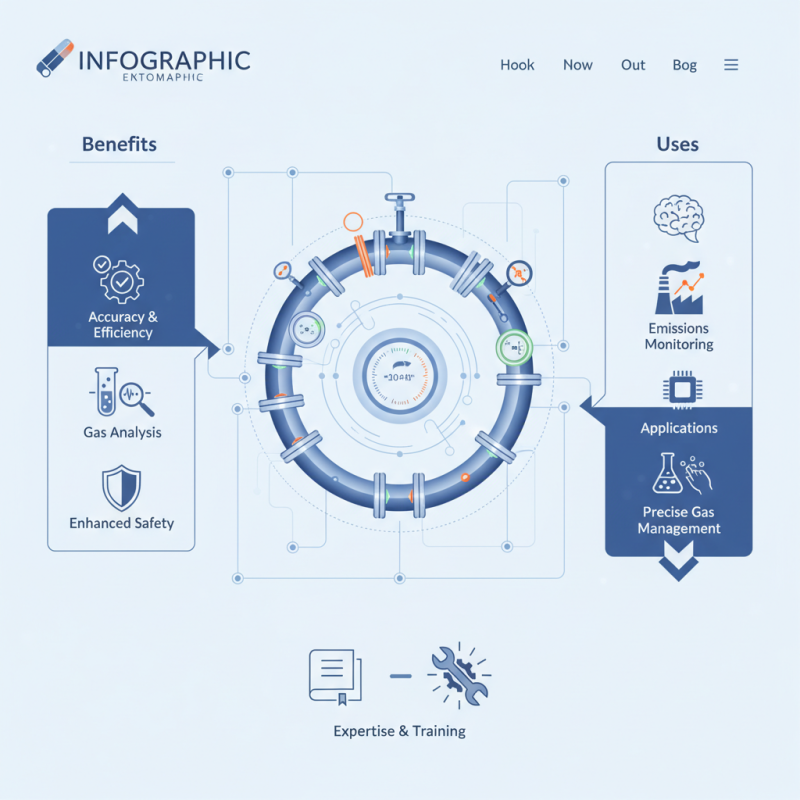
What is a Dynamic Gas Distribution Instrument Benefits and Uses?
Dynamic Gas Distribution Instruments play a crucial role in various industries. These instruments help in analyzing and distributing gases for a wide range of applications. Their significance lies in ensuring accuracy and efficiency in processes that depend on precise gas management.
In the world of industrial applications, the demand for reliable gas distribution is ever-increasing. These instruments offer professionals the ability to measure gas concentrations effectively. Users can monitor emissions and enhance safety in their operations. However, relying solely on technology without proper training can lead to errors.
Understanding how to utilize a Dynamic Gas Distribution Instrument is vital. Professionals must grasp both its benefits and limitations. This ensures optimal performance while minimizing risks associated with gas management. Expert knowledge is essential to harness these instruments effectively.
What is a Dynamic Gas Distribution Instrument?
Dynamic Gas Distribution Instruments (DGDI) play a critical role in gas analysis across various industries. These instruments offer real-time data for optimizing processes. Their ability to provide continuous and precise measurements enhances operational efficiency. According to a recent industry report, the market for such instruments is expected to grow by 6.5% annually, indicating a rising demand for reliable gas measurement solutions.
The technology behind DGDI utilizes advanced sensing mechanisms. These instruments measure how gas distributes within environments, which is vital for safety and compliance. They help in detecting leaks or irregular gas flow. Accurate gas distribution data can prevent costly downtime in manufacturing facilities or ensure safety in chemical plants. In a sector where precision impacts both economics and safety, DGDI has become indispensable.
However, the implementation of these tools isn't without challenges. Users must be trained to interpret data effectively. Misreading results can lead to dangerous situations. Furthermore, maintenance is crucial, as sensor accuracy can drift over time. Hence, while DGDI has its benefits, organizations must be prepared to address these complexities to fully leverage the advantages of dynamic gas distribution.
Key Features of Dynamic Gas Distribution Instruments
Dynamic gas distribution instruments are crucial in various applications. These devices efficiently control and measure gas flow in real-time. Their design allows for adaptability in different environments, making them valuable for both industrial and research settings.
One key feature is their accuracy. High precision is essential for gas analysis and distribution. These instruments often include advanced sensors that provide reliable data. Additionally, they can accommodate a range of gases, increasing their versatility. Many dynamic gas distribution instruments have user-friendly interfaces, enhancing the operator's experience.
While dynamic gas distribution instruments offer remarkable benefits, challenges remain. Calibration can be complex and requires expertise. Users must be vigilant about maintaining accuracy over time. Despite potential drawbacks, the advantages they provide in safety and efficiency are hard to overlook, urging a closer examination of their evolution and application.
Benefits of Using Dynamic Gas Distribution Instruments
Dynamic gas distribution instruments offer numerous advantages for various applications. These instruments excel in providing precise and consistent gas measurements across different processes. Their real-time data helps industries monitor and manage gas usage efficiently. This results in reduced waste and improved safety standards.
Another essential benefit is enhanced accuracy. Dynamic gas distribution instruments can adapt to fluctuating conditions. They can measure changes in gas composition effectively. This adaptability is crucial in refining processes and environmental monitoring. Additionally, these instruments help industries comply with environmental regulations. They ensure that emissions remain within acceptable limits.
However, using these instruments comes with its challenges. Calibration can be complex, requiring skilled personnel. Regular maintenance is also necessary to maintain accuracy. Companies must invest in training staff to handle these instruments properly. Despite these hurdles, the benefits often outweigh the challenges. Enhanced efficiency and compliance make these tools invaluable across industries.
Applications in Various Industries
Dynamic gas distribution instruments play a crucial role in various industries. They enable precise gas mixing and distribution. This capability is vital in sectors such as pharmaceuticals, aerospace, and energy. For instance, in the pharmaceutical industry, accurate gas control ensures the stability of reactive compounds. Studies show that even minor deviations can lead to significant quality issues.
In the aerospace sector, these instruments are essential for testing fuel mixtures. Gas mixtures must sustain extreme conditions. According to industry reports, a 10% error in gas composition can result in failures during critical tests. Additionally, the energy sector relies on these tools to monitor emissions. Regulations increasingly demand strict compliance to minimize environmental impact. Here, dynamic gas distribution instruments ensure that measurements are accurate and reliable.
Despite their benefits, there are challenges in implementation. High initial costs can limit accessibility for smaller companies. Additionally, training personnel to operate these tools effectively is crucial yet often overlooked. Some organizations struggle with integrating these systems into existing frameworks, leading to underutilization. Continuous improvement in these areas remains necessary to fully leverage the advantages of dynamic gas distribution instruments across different industries.
What is a Dynamic Gas Distribution Instrument Benefits and Uses? - Applications in Various Industries
| Industry | Application | Benefits | Key Features |
| Oil & Gas | Gas Flow Measurement | Improved accuracy, real-time data | High sensitivity, durable design |
| Chemical Processing | Gas Distribution Monitoring | Enhanced safety, operational efficiency | Flexible configuration, easy integration |
| Pharmaceutical | Process Control | Regulatory compliance, high reliability | Precise measurement, compact design |
| Food & Beverage | Quality Control | Consistent quality, waste reduction | User-friendly interface, high durability |
Comparison with Traditional Gas Distribution Methods
Dynamic gas distribution instruments represent a significant advancement over traditional gas distribution methods. While conventional techniques often rely on fixed networks and pressure regulators, dynamic systems adjust to real-time data. This leads to improved efficiency and reduced waste. According to the Gas Technology Institute, dynamic methods can decrease gas losses by up to 30% compared to traditional setups.
However, adopting dynamic distribution comes with challenges. Some studies indicate that initial installation costs can be higher, creating barriers for smaller operators. The complexity of integration with existing infrastructure may also pose difficulties. Despite these issues, the long-term savings and enhanced scalability can outweigh the initial hurdles. Researchers report an average return on investment of around 15% per year when transitioning to dynamic systems.
In contrast, traditional methods may experience greater fluctuations in pressure and flow, leading to customer complaints and potential safety issues. Data from the American Gas Association shows that traditional systems often operate with a 10% higher leakage rate. This results in significant increases in operational costs. Thus, some sectors may find traditional practices less viable as regulatory pressures mount for efficiency and environmental compliance.