How to Choose the Right Gate Valve for Your Needs?
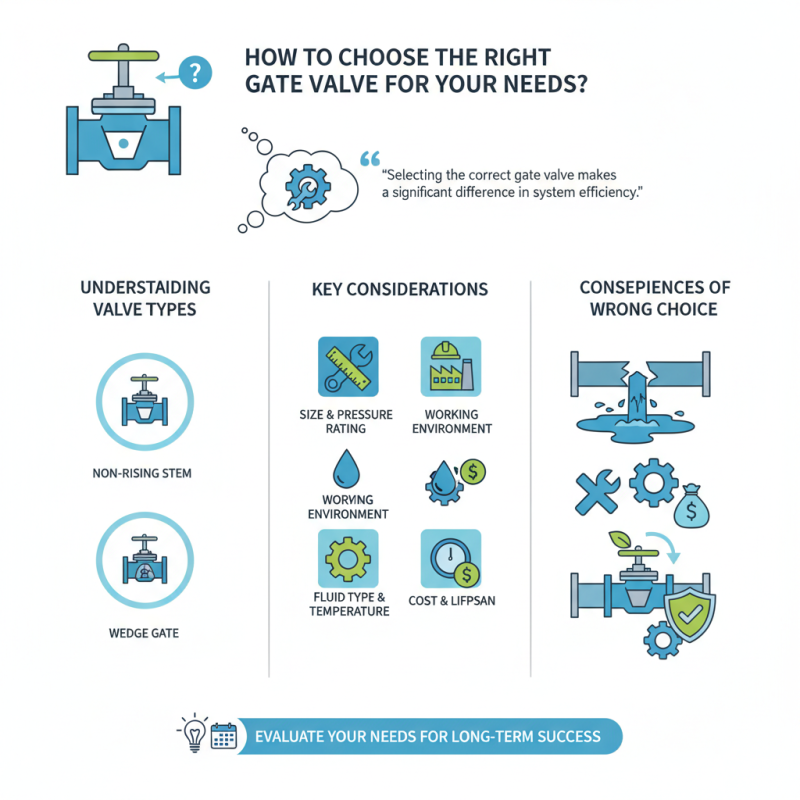
Choosing the right Gate Valve can be a challenging task. Industry expert John Smith, a leading authority in valve technology, once stated, “Selecting the correct gate valve makes a significant difference in system efficiency.” This highlights the importance of understanding valve types, materials, and operational requirements.
Gate valves are essential in controlling fluid flow in various applications. They can be found in water supply systems and industrial pipelines. Choosing the appropriate gate valve means considering factors such as size, pressure rating, and working environment. Mistakes in selection can lead to inefficiencies or costly repairs.
Visualize a scenario where a faulty gate valve causes a leak. The consequences would be extensive. The right choice prevents such disasters. A well-suited gate valve promotes optimal performance. Yet, it is easy to overlook details in this selection process. Taking the time to evaluate your needs will pay off in the long run.
Understanding Gate Valves: Types and Applications in Industry
Gate valves are vital components in many industrial applications. They control the flow of liquids and gases, making their correct choice essential for optimal performance. Various types of gate valves exist, each tailored for specific uses. For instance, wedge gate valves are popular due to their durability and ability to handle high pressures. According to a recent report, the global gate valve market is projected to grow by 5.6% annually, indicating increasing demand across sectors like oil and gas, water supply, and power generation.
In industries such as oil and gas, the need for reliable gate valves is critical. A study showed that nearly 30% of valve failures stem from improper selection. Choosing the right valve is complex. Factors like pressure, temperature, and media type must be considered. A miscalculated choice can lead to leaks and costly downtime. Interestingly, a significant percentage of maintenance teams feel undertrained in valve selection processes. They often rely on outdated information, affecting decision quality.
Applications also vary by industry. In water treatment plants, resilient seated gate valves ensure tight sealing. In high-temperature industries like power generation, forged steel gate valves are needed for strength. Each application demands a unique approach. Understanding these subtleties is crucial for engineers. Performance and reliability can hinge on this decision. Continuous professional development remains essential to navigate the vast array of options effectively.
Key Factors to Consider When Selecting a Gate Valve
Choosing the right gate valve requires understanding several key factors. First, consider the material of the valve. Common options include cast iron, stainless steel, and brass. Each material has its strengths and weaknesses. For example, stainless steel is resistant to corrosion but can be expensive.
Next, evaluate the size and pressure rating of the valve. A valve that's too small won’t function effectively. Similarly, a low pressure rating may lead to failures. It is critical to measure the pipe diameter accurately. This measurement influences the flow capacity significantly.
Don’t overlook the type of stem. Rising stems allow for easy visibility of the valve status. Non-rising stems save space but can be less intuitive. Some users might prefer a straightforward design. Balancing complexity and functionality is essential for a good fit. The wrong choice can lead to leaks or other issues. Reflect on your specific needs before making a decision.
Material Considerations: Choosing the Right Construction for Durability
When selecting a gate valve, material plays a crucial role in durability. Common materials include brass, stainless steel, and cast iron. Brass valves resist corrosion well but may not handle high temperatures effectively. Stainless steel offers excellent strength but can be expensive. Cast iron, though rugged, may not suit all fluid types. It's essential to match the material with your specific application.
Consider the environmental conditions as well. Factors like temperature fluctuations and exposure to chemicals can affect material performance. For instance, exposure to harsh chemicals can corrode certain metals. Ask yourself questions about your system. Will the valve be exposed to extreme temperatures? What fluids will it handle? These considerations are vital for longevity.
You may find yourself unsure at times. Perhaps you're torn between choosing cost-effective options versus durable materials. This dilemma is common. Reflecting on your specific needs can clarify your decision. Remember, the right material will ensure the functionality and lifespan of the gate valve.
Sizing Guidelines: Ensuring Proper Flow Capacity and Pressure Ratings
Choosing the right gate valve starts with understanding sizing guidelines. Proper flow capacity is essential for optimal performance. Calculate the required flow rate for your application. Each valve has a specific capacity, so make sure to match it correctly. Sometimes, this requires consulting technical documents or flow charts.
Pressure ratings also play a critical role in valve selection. Know your system's pressure to ensure the valve can handle it. Underestimating this can lead to failure. A valve that cannot endure pressure will leak or, worse, break. These mistakes can be costly.
It's not just about numbers; context matters too. Analyze what conditions the valve will face. High temperatures may change its behavior. Evaluate the materials used in manufacturing. Often, less expensive options may not perform well in demanding environments. Rethink your choices carefully.
Maintenance and Operational Best Practices for Gate Valves
Maintaining gate valves requires careful attention. Regular inspections help detect early signs of wear or corrosion. Industry data shows that 30% of valve failures are due to improper maintenance. Check for leaks and ensure proper seating regularly. Addressing issues early can prevent larger problems later.
Operational practices are just as crucial. Ensure valves open and close fully. Partial openings can cause water hammer effects, leading to damage. Research indicates that maintaining proper operating pressure significantly extends valve life. Training staff on proper use is essential. Many companies report downtime due to user errors.
Don’t forget to consider materials when selecting gate valves. The environment impacts their durability. For example, valves in corrosive settings need different materials than those in clean water systems. Regularly updating your maintenance protocols can lead to better performance and fewer unexpected failures. Inviting feedback from field operators can help refine these practices.