What Is the Best High Mast Lighting in 2026?
Choosing the best High Mast Lighting in 2026 is not just a matter of picking the brightest fixture. A floodlit field, port yard, and highway interchange each need different optics, mounting heights, and light levels. Mark Rea, a lighting researcher and former director of the Lighting Research Center, is often associated with the phrase, “Light is a drug.” It is a useful reminder: light affects people, visibility, and the character of a space. More light is not always better.
This guide compares the factors that matter in real installations: measured output, beam distribution, glare control, color quality, energy use, and maintenance access. A good design should show how evenly light reaches the ground, not merely advertise a high lumen figure. Ask for site-specific photometric calculations, and check whether the proposed pole height and aiming angles match the actual layout. Details matter. So do serviceability, corrosion protection, and the availability of replacement drivers. These points can be easy to overlook when a product page focuses on wattage.
There is no single winner for every project. A strong option for a sports venue may be poorly suited to a logistics yard. This review weighs performance against operating needs and installation conditions, while noting where published specifications leave questions unanswered. That uncertainty matters. Use the comparisons as a shortlist, then confirm the design with qualified lighting professionals and project-specific measurements.
What High Mast Lighting Is and How It Works
High-mast lighting uses tall poles to illuminate broad outdoor areas such as highway interchanges, ports, and large yards. The Federal Highway Administration’s Lighting Handbook describes high-mast installations as mounted at least 60 feet above the ground. At that height, several luminaires can spread light across a wide zone, reducing the number of poles needed. Each luminaire’s optics shape the beam, while aiming angles help control brightness and overlap. The electrical system supplies power through the pole, and controls may switch or dim fixtures. Not magic.
Design is more than mounting lights high. The FHWA handbook explains the system type; IES RP-8-22 provides roadway-lighting guidance using criteria such as luminance, uniformity, and glare. These measures matter because a bright patch beside a dark roadway can still hide hazards. Engineers assess mounting height, spacing, surface conditions, and likely viewing angles before choosing output and optics. Maintenance matters, too: dirt on a lens or a failed fixture can create uneven coverage. A detail often missed is the light beyond the target area. It deserves attention during aiming and commissioning.
What Is the Best High Mast Lighting in 2026? — What High Mast Lighting Is and How It Works
High mast lighting uses luminaires mounted on tall poles to illuminate large outdoor areas such as highways, ports, and sports venues. This chart shows the theoretical relative illuminance directly below a single luminaire as mounting height increases, assuming the same luminous intensity and an ideal point source.
Values are calculated using the inverse-square relationship and normalized to 100% at 20 m. Actual site performance depends on luminaire optics, aiming, pole layout, light output, and other design conditions; a lighting calculation is needed to select the right system.
Where High Mast Lighting Is Used in 2026
What Is the Best High Mast Lighting in 2026?
Where High Mast Lighting Is Used in 2026
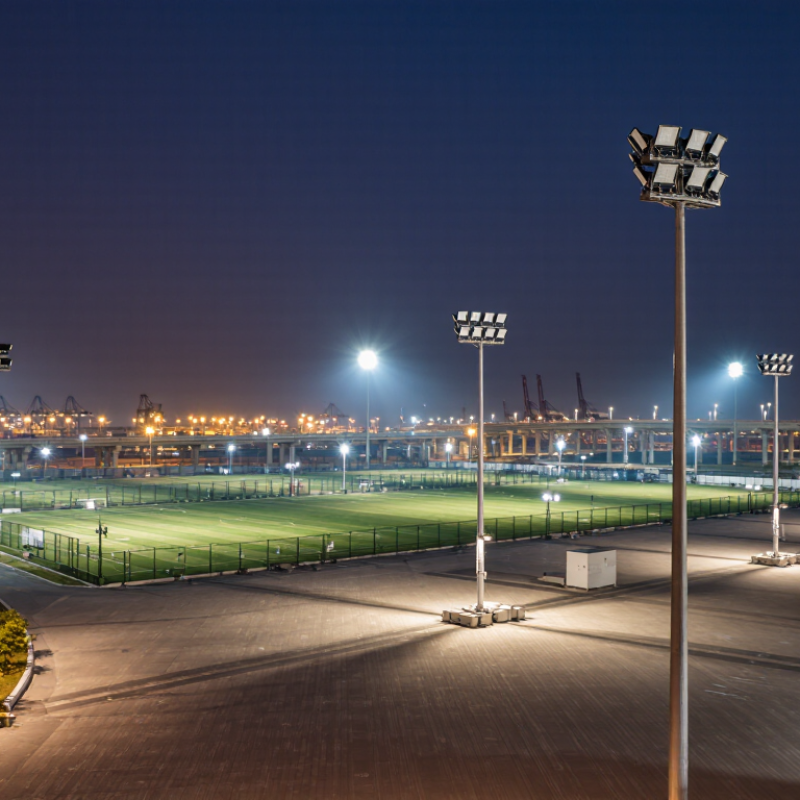
High mast lighting is useful where wide areas need consistent illumination with fewer poles. In 2026, common applications include seaports, airport aprons, highway interchanges, sports grounds, and large distribution yards. At a busy port, tall poles can light container lanes while leaving room for cranes and trucks. The right system depends on pole height, beam distribution, operating hours, and local weather. A bright fixture alone does not guarantee safe visibility. Poor aiming can create glare for drivers or leave dark patches between work zones.
Tips: Ask for a site-specific lighting layout before choosing equipment. Check illumination levels, glare control, pole wind loading, and access for maintenance. Small details matter. Salt air, dust, and vibration can affect performance over time.
For sports venues, even light across the playing surface helps players and cameras. At industrial sites, durable housings and reliable controls can reduce service interruptions. Ports and road networks may benefit from dimming schedules when activity falls, but settings should match real operating needs. Compare measured performance, not just advertised output. I would also review the maintenance plan; it is easy to overlook until a fixture fails high above the ground. A careful site assessment usually points to a better fit than choosing by wattage alone.
Which Features Define a High-Performing High Mast System
What Is the Best High Mast Lighting in 2026? Which Features Define a High-Performing High Mast System
A strong high mast system is more than a high lumen rating. It needs controlled optics, reliable output, and even illumination across the ground. The U.S. Department of Energy’s 2020 U.S. Lighting Market Characterization estimated that lighting used 244 TWh of electricity, about 6% of U.S. consumption. That figure covers many lighting types, not high mast sites alone, but it shows why system efficiency matters. Compare delivered light and energy use, not just fixture wattage. Ask for project-specific photometric calculations; a bright pole can still leave dark patches.
Uniformity and glare deserve equal attention. Tight optical control helps keep light on roads, yards, or work areas instead of spilling into nearby spaces. Check the design for mounting height, pole spacing, wind exposure, and maintenance access. Look for clear test data on efficacy, lumen maintenance, surge protection, and environmental sealing. A neat specification sheet is useful, but real site conditions can still expose gaps.
Tips: Request the photometric file and a layout drawing before approval. Confirm that the calculation reflects actual pole locations and target surfaces. Then inspect one installed area at night. Small aiming errors matter. Some projects also need dimming schedules, though controls add complexity and should be tested before handover.
How LED, Solar, and Conventional High Mast Lights Compare
What Is the Best High Mast Lighting in 2026?
How LED, Solar, and Conventional High Mast Lights Compare
The best option depends on the site, operating hours, and available power. LED high mast fixtures use less energy than many conventional systems and can provide even coverage when optics are selected carefully. They start quickly and often need less frequent lamp replacement. On a port apron, that can mean fewer maintenance visits and less disruption. That matters.
Solar high mast lighting can reduce dependence on grid connections, especially in remote yards or road projects. A sound design accounts for local sunlight, battery capacity, pole height, and several cloudy days. But winter conditions can shrink the energy margin. Not always. Solar may suit a low-traffic area, yet struggle where bright lighting is needed all night. I would check real seasonal solar data, not just an annual average.
Conventional high-intensity discharge lights may still be practical where existing equipment and electrical infrastructure are already in place. However, warm-up time, energy use, and lamp changes can affect operating costs. A fair comparison includes more than purchase price: examine light levels on the ground, glare, maintenance access, and expected runtime. Even a careful calculation can miss site details, so a nighttime trial or lighting study can reveal dark patches before installation.
How to Choose and Maintain High Mast Lighting for Each Site
Choosing the best high mast lighting in 2026 starts with the site, not the fixture. A freight yard with tall trailers needs different optics and aiming from an open sports field. Map pole height, mounting positions, operating hours, and target light levels before comparing products. IES RP-8-22 provides roadway-lighting design guidance, including illuminance and uniformity considerations. For each site, check those calculations against actual task areas, glare, and shadowing. A plan can look precise on screen and still miss a dark loading bay.
Tips: Ask for a photometric layout based on your site dimensions. Check the fixture’s rated output, distribution, surge protection, and dimming compatibility. The U.S. Department of Energy’s LED lighting guidance reports that LEDs can use up to 75% less energy than incandescent lighting; that benchmark is not a direct comparison with existing high mast systems. Measure your current system before estimating savings.
Maintenance matters. Inspect brackets, wiring, lenses, and corrosion at scheduled intervals, and clean optics when dust or salt buildup reduces output. Record failures and light levels; patterns can reveal poor aiming or repeated driver problems. Replace failed components with compatible parts, then verify performance from the ground. Don’t assume a long rated life means maintenance-free operation. Exact inspection intervals depend on weather, vibration, and site use, so adjust them when field checks reveal faster wear.